Cute, funny, and thought-provoking animated short, with audio from an Alan Watts lecture how we tend to treat music in our lives (or perhaps more accurately, how we tend to put it off). Produced by Trey Parker and Matt Stone of South Park fame.
Life & Music
Monday, July 28, 2008


Thursday, June 26, 2008
Wednesday, June 18, 2008
Monday, June 16, 2008
The Eco-Friendly Mega-City of the Future
This is a very nicely done presentation of the environmentally-friendly city of the future. With fast-rising oil prices, there seems to be more interest than ever in alternative energy sources. You'll need a tiny bit of extra patience as you have to click "Continue" three times or so, but it's worth it:
Popular Science's Plan for Tomorrow's Mega-City
Popular Science's Plan for Tomorrow's Mega-City
Thursday, June 12, 2008
Frugal Beginners Guide To Green
I recently bought a house and I've been researching environmentally-friendly ideas for renovating my home. My primary source of information has been this book:
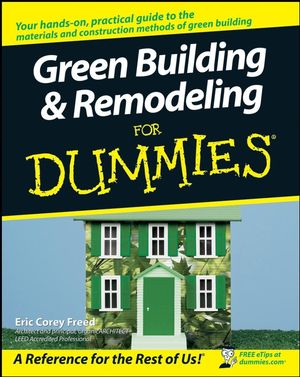
Here's a nice introductory article for "green" living and the financial benefits:
Go Green And Save Green: Beginner's Guide
In this guide, you’ll find out how to spend less than $1,200 to save over $8,000 over the course of 5 years. Here are suggestions of free or low cost things you can do to help you go green and save green.
Friday, May 30, 2008
Monday, May 19, 2008
Monday, April 28, 2008
Tuesday, April 08, 2008
Tuesday, April 01, 2008
Dick Moore's Interval Practice Routine
This is the practice routine we learned from F. Richard Moore, a professor at University of California, San Diego:
1. Pick a starting note. For the purpose of this article, the starting note is C. You may use an instrument to provide the starting note only. Do not use an instrument for the rest of the exercise
2. Sing a minor 2nd up, then back down, using the note names then the number of half steps in the interval, for example:
C Db C
Minor second one
3. Repeat #2 above for the following intervals: major 2nd, minor 3rd, perfect 4th, augmented 4th/diminished 5th (depending on the enharmonic spelling you're using), perfect 5th, minor 6th, major 6th, minor 7th, major 7th, octave. For example, when you get to the minor 7th:
C Bb C
Minor 7th ten
4. After you have done #2 and #3 above for the octave, reset your starting note to the octave above your original starting note. For example, your new starting note is the octave C above the original C.
5. Sing a minor 2nd interval down, using the note names and the number of half steps in the interval. For example:
C B C
Minor second 1
6. Repeat #5 above for major 2nd, minor 3rd, perfect 4th, augmented 4th/diminished 5th (depending on the enharmonic spelling you're using), perfect 5th, minor 6th, major 6th, minor 7th, major 7th, octave.
Vary your starting notes from session to session. Start from Bb, A, F#, etc. Avoid using "pet" starting notes.
1. Pick a starting note. For the purpose of this article, the starting note is C. You may use an instrument to provide the starting note only. Do not use an instrument for the rest of the exercise
2. Sing a minor 2nd up, then back down, using the note names then the number of half steps in the interval, for example:
C Db C
Minor second one
3. Repeat #2 above for the following intervals: major 2nd, minor 3rd, perfect 4th, augmented 4th/diminished 5th (depending on the enharmonic spelling you're using), perfect 5th, minor 6th, major 6th, minor 7th, major 7th, octave. For example, when you get to the minor 7th:
C Bb C
Minor 7th ten
4. After you have done #2 and #3 above for the octave, reset your starting note to the octave above your original starting note. For example, your new starting note is the octave C above the original C.
5. Sing a minor 2nd interval down, using the note names and the number of half steps in the interval. For example:
C B C
Minor second 1
6. Repeat #5 above for major 2nd, minor 3rd, perfect 4th, augmented 4th/diminished 5th (depending on the enharmonic spelling you're using), perfect 5th, minor 6th, major 6th, minor 7th, major 7th, octave.
Vary your starting notes from session to session. Start from Bb, A, F#, etc. Avoid using "pet" starting notes.
Monday, February 25, 2008
Give an Old Laptop New Life with Cheap (or Free) Projects
Give an Old Laptop New Life with Cheap (or Free) Projects
I have a Mac iBook which is getting a bit long in the tooth, by computer standards. I'm sort of bookmarking this article for ideas on extending the life of my (mostly) trusty Mac laptop...
And a related article of interest:
14 Best Ways to Use Your Computer’s Spare Time
I have a Mac iBook which is getting a bit long in the tooth, by computer standards. I'm sort of bookmarking this article for ideas on extending the life of my (mostly) trusty Mac laptop...
And a related article of interest:
14 Best Ways to Use Your Computer’s Spare Time
Tuesday, February 12, 2008
Pat Metheny and Joe Diorio - Blues In The Closet
Nice pairing of one of my favorite jazz guitarists with one of the great jazz guitar educators (who isn't a bad player himself!)
Monday, February 11, 2008
McNiel Lesson on Hybrid Picking (with video)
I work a lot with the Hybrid Picking For Guitar book and highly recommend it. That said, it's nice to see another take on the technique, particularly with video demos.
McNiel Lesson on Hybrid Picking (with video)
McNiel Lesson on Hybrid Picking (with video)
Thursday, November 15, 2007
Stanley Clarke, Upright Bass Virtuoso
Mr. Clarke going nuts with flamenco and slap bass licks on the upright acoustic bass:
Monday, October 01, 2007
A practice idea for developing jazz improvisational skills
I've recently started pursuing a practice idea for developing the ability to improvise over a jazz tune. When I take a solo, I have a tendency to rely too much on muscle memory and the layout of the instrument. I want the solo to be created by my imagination rather than mindless movement of the fingers. Here is the idea:
1. Listen to lots of jazz, especially recordings of jazz musicians playing the tune you are specifically working on.
2. Memorize the melody and chords to the tune.
3. While away from your instrument(s), mentally practice soloing over the tune - imagine your instrument playing the notes with an imaginary rhythm section playing the chords for you.
4. When you have your instrument at hand, do this:
a. Make up a melody for a 1-3 measure chunk of the tune in your head, without playing your instrument.
b. Play the melody you made up in 4a. above on your instrument.
c. Repeat 4a. and 4b. until you're done with the tune.
The purpose of this practice is to develop the ability to compose a solo on the fly - ie. improvise. By composing short phrases at a time, the task seems less daunting.
As a demonstration of this practice idea, I recorded myself doing Step 4 above for the tune Blue Bossa, with a backing part courtesy of Band In A Box. I recorded two guitar parts, panned right and left in the stereo field, so that you can hear the two guitars taking turns playing phrases that I composed on the spot.
Some of the phrases required several practice repetitions and re-recording. This is because I can compose a phrase in my head that does not match anything I've ever practiced on guitar before, and sometimes this phrase does not fit neatly under the fingers. Thus it took me about an hour to record this one-minute track. The aim was not to be perfect - let alone impress anybody - but simply to capture the main gist of the melody I spontaneously composed for Blue Bossa. The other reason I did not clean up all my mistakes on this recording was to document my starting point as I journey down the road of jazz discovery - I can't claim progress without showing where I started.
My September 30,2007 solo over Blue Bossa is now up on my MySpace page.
1. Listen to lots of jazz, especially recordings of jazz musicians playing the tune you are specifically working on.
2. Memorize the melody and chords to the tune.
3. While away from your instrument(s), mentally practice soloing over the tune - imagine your instrument playing the notes with an imaginary rhythm section playing the chords for you.
4. When you have your instrument at hand, do this:
a. Make up a melody for a 1-3 measure chunk of the tune in your head, without playing your instrument.
b. Play the melody you made up in 4a. above on your instrument.
c. Repeat 4a. and 4b. until you're done with the tune.
The purpose of this practice is to develop the ability to compose a solo on the fly - ie. improvise. By composing short phrases at a time, the task seems less daunting.
As a demonstration of this practice idea, I recorded myself doing Step 4 above for the tune Blue Bossa, with a backing part courtesy of Band In A Box. I recorded two guitar parts, panned right and left in the stereo field, so that you can hear the two guitars taking turns playing phrases that I composed on the spot.
Some of the phrases required several practice repetitions and re-recording. This is because I can compose a phrase in my head that does not match anything I've ever practiced on guitar before, and sometimes this phrase does not fit neatly under the fingers. Thus it took me about an hour to record this one-minute track. The aim was not to be perfect - let alone impress anybody - but simply to capture the main gist of the melody I spontaneously composed for Blue Bossa. The other reason I did not clean up all my mistakes on this recording was to document my starting point as I journey down the road of jazz discovery - I can't claim progress without showing where I started.
My September 30,2007 solo over Blue Bossa is now up on my MySpace page.
Monday, August 06, 2007
Ear training Practice for Parallel Modality
Dave Woods just posted this to the jazz guitar group. Enjoy!
Ear training Practice for Parallel Modality
On your guitar using the open A string as a common Tonal Center, play this
---0------
---10----
---8-----
---7----
---0---
---X---
This will play an A Tonal Center on the open 5th str., and the open E on the
1st. string will sound the perfect 5th. These set up an A Tonal Center drone on
the Guitar. The fretted notes give you A D# A, and against the A Tonal Center,
it sounds the Key Tritone of A Major Lydian Key of E.
(A) B C# (D#) E F# G# (A). Strum the guitar, play it with the open A,
open E Tritone drone, and sing the Mode. Then sing The Mode in your mind only,
as you play the drone. You will be hearing the Key Tritone against the Tonal
Center. Nothing cements the feeling of a Mode in your consciousness better than
this.
Next, on your guitar using the open A string as a common Tonal Center, drop
the fretted notes down one fret.
---0------
---9----
---7-----
---6----
---0---
---X---
This will play an A Tonal Center on the 5th str., and the open E on the 1st.
string will sound the perfect 5th. This sets up an A Tonal Center The fretted
notes give you A D# A, and it sounds the key Tritone of A Major Ionian (A) B
C# (D) E F# G# (A). Key of E.
Strum the guitar, play it as a tonal drone, and sing the Mode against the
drone. Then sing it in your mind only, as you play the drone. D# is lowered to
D. This gives a feeling of loss of tension.
Next, move the fretted notes down another fret.
---0------
---8----
---6-----
---5----
---0---
---X---
The fretted notes give you G C# G, and it sounds the Key Tritone of A
Mixolydian Key of D
(A) B C# (D) E F# G (A). Strum the guitar, play it as a tonal
drone, and sing the Mode. Then sing it in your mind only, as you play the
drone. Here D# drops to D. Go back and forth till' you sense the drop. G# is
lowered to G.
Next, move the fretted notes down another fret.
---0------
---7----
---5-----
---4----
---0---
---X---
The fretted notes give you F# C F# , and it sounds the Key Tritone of
A Minor Dorian Key of G
(A) B C (D) E F# G (A). Strum the guitar, play the tonal drone,
and sing the Mode. Then sing it in your mind only, as you play the drone. Here
C# drops to C. Go back and forth till' you sense the drop.
Next, move the fretted notes down another fret.
---0------
---6----
---4-----
---3----
---0---
---X---
The fretted notes give you F B F , and it sounds the Key Tritone of A
Minor Aeolian Key of C
(A) B C (D) E F G (A). Strum the guitar, play the tonal drone,
and sing the Mode. Then sing it in your mind only, as you play the drone. Here
F# drops to F. Go back and forth till' you sense the drop.
Next, move the fretted notes down another fret.
---0------
---5----
---3-----
---2----
---0---
---X---
The fretted notes give you F Bb F , and it sounds the Key Tritone of
A Minor Phrygian Key of F
(A) Bb C (D) E F G (A). Strum the guitar, play the tonal
drone, and sing the Mode. Then sing it in your mind only, as you play the
drone. Here F# drops to F, and B lowers to Bb. Go back and forth Through the
Modes till' you sense the drop.
A lydian has the most tension, as you go down through the Modes from
A Lydian to A Phrygian, the tension keeps dropping. Keep listening, singing, and
singing in your head as you listen to the Modes against the Drone.. This is
great training for composers, but will be a revealation to jazzers as well.
Dave further elaborates:
The Parallel Modality exercise was invented for a very talented friend who
wanted to learn to hear Key and chord Changes better.
In parallel Modality the Tonal Center is fixed on a given tone and the keys
change in relation to it. As you go through it, you feel the lift and drop
within you as the Key Tritone changes in relation to the Tonal Center and notes
get raised and lowered. Lydian is the most tense and brilliant, and as you go
down the line, Phrygian is the least tense and an angry sad feeling.
I come from a composition background. Grant Fletcher was my teacher at Arizona
State University back in the 60's.
There, I learned a theory of modulation.
Starting from the Key of C, G is 1#, D is 2#'s, A is 3#'s, E is 4#'s B is 5#'s,
and F# is 6#'s. In Modulating from the Key of C, to keys with sharps, the
pitches (frequencies) of notes are being raised (getting faster). .
Starting from the Key of C, F is 1b, Bb is 2 b's, Eb is 3b's, Ab is 4b's, Db
is 5 b's, and Gb is 6 b's. Here, pitches (frequences) of notes are being
lowered (getting slower) Therefor, the body feels a drop in tension.
These effects are best felt when the key changes are heard within the same
octave register.
Gb and F# are enharmonically the same, and here the effect of a lift or drop of
frequenct cancels itself out. raising from C to 5 #'s, or lowering from C to
five b's is the limit of the effect.
In my opinion, such as it is, training your ear (inner feelings) to be sensitive
to key changes is the all important first step.
Whin I hear a Key change the new key opens up within me in all regesters from
high to low at once, and I can just dive in. We hear and sing inside, and that
is projected through the guitar.
Dave Woods www.jazzguitarstartingright.com
Ear training Practice for Parallel Modality
On your guitar using the open A string as a common Tonal Center, play this
---0------
---10----
---8-----
---7----
---0---
---X---
This will play an A Tonal Center on the open 5th str., and the open E on the
1st. string will sound the perfect 5th. These set up an A Tonal Center drone on
the Guitar. The fretted notes give you A D# A, and against the A Tonal Center,
it sounds the Key Tritone of A Major Lydian Key of E.
(A) B C# (D#) E F# G# (A). Strum the guitar, play it with the open A,
open E Tritone drone, and sing the Mode. Then sing The Mode in your mind only,
as you play the drone. You will be hearing the Key Tritone against the Tonal
Center. Nothing cements the feeling of a Mode in your consciousness better than
this.
Next, on your guitar using the open A string as a common Tonal Center, drop
the fretted notes down one fret.
---0------
---9----
---7-----
---6----
---0---
---X---
This will play an A Tonal Center on the 5th str., and the open E on the 1st.
string will sound the perfect 5th. This sets up an A Tonal Center The fretted
notes give you A D# A, and it sounds the key Tritone of A Major Ionian (A) B
C# (D) E F# G# (A). Key of E.
Strum the guitar, play it as a tonal drone, and sing the Mode against the
drone. Then sing it in your mind only, as you play the drone. D# is lowered to
D. This gives a feeling of loss of tension.
Next, move the fretted notes down another fret.
---0------
---8----
---6-----
---5----
---0---
---X---
The fretted notes give you G C# G, and it sounds the Key Tritone of A
Mixolydian Key of D
(A) B C# (D) E F# G (A). Strum the guitar, play it as a tonal
drone, and sing the Mode. Then sing it in your mind only, as you play the
drone. Here D# drops to D. Go back and forth till' you sense the drop. G# is
lowered to G.
Next, move the fretted notes down another fret.
---0------
---7----
---5-----
---4----
---0---
---X---
The fretted notes give you F# C F# , and it sounds the Key Tritone of
A Minor Dorian Key of G
(A) B C (D) E F# G (A). Strum the guitar, play the tonal drone,
and sing the Mode. Then sing it in your mind only, as you play the drone. Here
C# drops to C. Go back and forth till' you sense the drop.
Next, move the fretted notes down another fret.
---0------
---6----
---4-----
---3----
---0---
---X---
The fretted notes give you F B F , and it sounds the Key Tritone of A
Minor Aeolian Key of C
(A) B C (D) E F G (A). Strum the guitar, play the tonal drone,
and sing the Mode. Then sing it in your mind only, as you play the drone. Here
F# drops to F. Go back and forth till' you sense the drop.
Next, move the fretted notes down another fret.
---0------
---5----
---3-----
---2----
---0---
---X---
The fretted notes give you F Bb F , and it sounds the Key Tritone of
A Minor Phrygian Key of F
(A) Bb C (D) E F G (A). Strum the guitar, play the tonal
drone, and sing the Mode. Then sing it in your mind only, as you play the
drone. Here F# drops to F, and B lowers to Bb. Go back and forth Through the
Modes till' you sense the drop.
A lydian has the most tension, as you go down through the Modes from
A Lydian to A Phrygian, the tension keeps dropping. Keep listening, singing, and
singing in your head as you listen to the Modes against the Drone.. This is
great training for composers, but will be a revealation to jazzers as well.
Dave further elaborates:
The Parallel Modality exercise was invented for a very talented friend who
wanted to learn to hear Key and chord Changes better.
In parallel Modality the Tonal Center is fixed on a given tone and the keys
change in relation to it. As you go through it, you feel the lift and drop
within you as the Key Tritone changes in relation to the Tonal Center and notes
get raised and lowered. Lydian is the most tense and brilliant, and as you go
down the line, Phrygian is the least tense and an angry sad feeling.
I come from a composition background. Grant Fletcher was my teacher at Arizona
State University back in the 60's.
There, I learned a theory of modulation.
Starting from the Key of C, G is 1#, D is 2#'s, A is 3#'s, E is 4#'s B is 5#'s,
and F# is 6#'s. In Modulating from the Key of C, to keys with sharps, the
pitches (frequencies) of notes are being raised (getting faster). .
Starting from the Key of C, F is 1b, Bb is 2 b's, Eb is 3b's, Ab is 4b's, Db
is 5 b's, and Gb is 6 b's. Here, pitches (frequences) of notes are being
lowered (getting slower) Therefor, the body feels a drop in tension.
These effects are best felt when the key changes are heard within the same
octave register.
Gb and F# are enharmonically the same, and here the effect of a lift or drop of
frequenct cancels itself out. raising from C to 5 #'s, or lowering from C to
five b's is the limit of the effect.
In my opinion, such as it is, training your ear (inner feelings) to be sensitive
to key changes is the all important first step.
Whin I hear a Key change the new key opens up within me in all regesters from
high to low at once, and I can just dive in. We hear and sing inside, and that
is projected through the guitar.
Dave Woods www.jazzguitarstartingright.com
Tuesday, July 31, 2007
Physical Training Update
My apologies to anyone who is still following this blog - I've been really slacking off on updating it.
In my quest to rehab my lower back, I noticed that the Yoga routine assigned to me by my last two teachers emphasized the core in some way. I discontinued Yoga lessons because of the need to create some time in my schedule for other things, but carried the idea of emphasizing core work to my regular exercise.
Monday's training, with Intuitive Training scores:
Circuit (done 5x):
Chinups x6, RPT=8, RPE=6, RPD=4
Power Wheel Hand Walk x10 forward and backwards, RPT=8, RPE=4, RPD=4
Power Wheel Leg Curl x5, RPT=6, RPE=5, RPD=3
Power Wheel Pike Up x10, RPT=8, RPE=4, RPD=4
Rest 3-5 min.
Finish with Chest Expander work to compensate for training effects on shoulder. I was experiencing left shoulder soreness from the above routine until I tried the Chest Expander exercises I'd used to rehab the same shoulder a couple of years ago.
This has been my exercise routine of late, with rep numbers increasing as Intuitive Training scores allow. As a very brief recap, if RPT (Rate of Perceived Technique) is 8 or greaters, RPE (Rate of Perceived Effort) is 3-4 or less, and RPD (Rate of Perceived Discomfort) is 4 or less, then it is time to increase exercise difficulty. Intuitive Training is of course from Scott Sonnon's Circular Strength Training system.
The Power Wheel came with an instructional DVD and a brief set of printed instructions, which differ from one another in what exercises are prescribed for each skill level, so I use elements from both the DVD and the printed manual.
I use Lifeline's Jungle Gym 2 as my chinup device. I do chinups to strengthen my back from the top side - so the entire back is covered. The chinup was also one of the few ways to strengthen my arms without negatively impacting my back.
I'll keep doing this routine until I can do 10 Power Wheel Leg Curls. I figure by then the lower back should be strong enough to handle a switchover to Clubbell training.
In my quest to rehab my lower back, I noticed that the Yoga routine assigned to me by my last two teachers emphasized the core in some way. I discontinued Yoga lessons because of the need to create some time in my schedule for other things, but carried the idea of emphasizing core work to my regular exercise.
Monday's training, with Intuitive Training scores:
Circuit (done 5x):
Chinups x6, RPT=8, RPE=6, RPD=4
Power Wheel Hand Walk x10 forward and backwards, RPT=8, RPE=4, RPD=4
Power Wheel Leg Curl x5, RPT=6, RPE=5, RPD=3
Power Wheel Pike Up x10, RPT=8, RPE=4, RPD=4
Rest 3-5 min.
Finish with Chest Expander work to compensate for training effects on shoulder. I was experiencing left shoulder soreness from the above routine until I tried the Chest Expander exercises I'd used to rehab the same shoulder a couple of years ago.
This has been my exercise routine of late, with rep numbers increasing as Intuitive Training scores allow. As a very brief recap, if RPT (Rate of Perceived Technique) is 8 or greaters, RPE (Rate of Perceived Effort) is 3-4 or less, and RPD (Rate of Perceived Discomfort) is 4 or less, then it is time to increase exercise difficulty. Intuitive Training is of course from Scott Sonnon's Circular Strength Training system.
The Power Wheel came with an instructional DVD and a brief set of printed instructions, which differ from one another in what exercises are prescribed for each skill level, so I use elements from both the DVD and the printed manual.
I use Lifeline's Jungle Gym 2 as my chinup device. I do chinups to strengthen my back from the top side - so the entire back is covered. The chinup was also one of the few ways to strengthen my arms without negatively impacting my back.
I'll keep doing this routine until I can do 10 Power Wheel Leg Curls. I figure by then the lower back should be strong enough to handle a switchover to Clubbell training.
Subscribe to:
Posts (Atom)